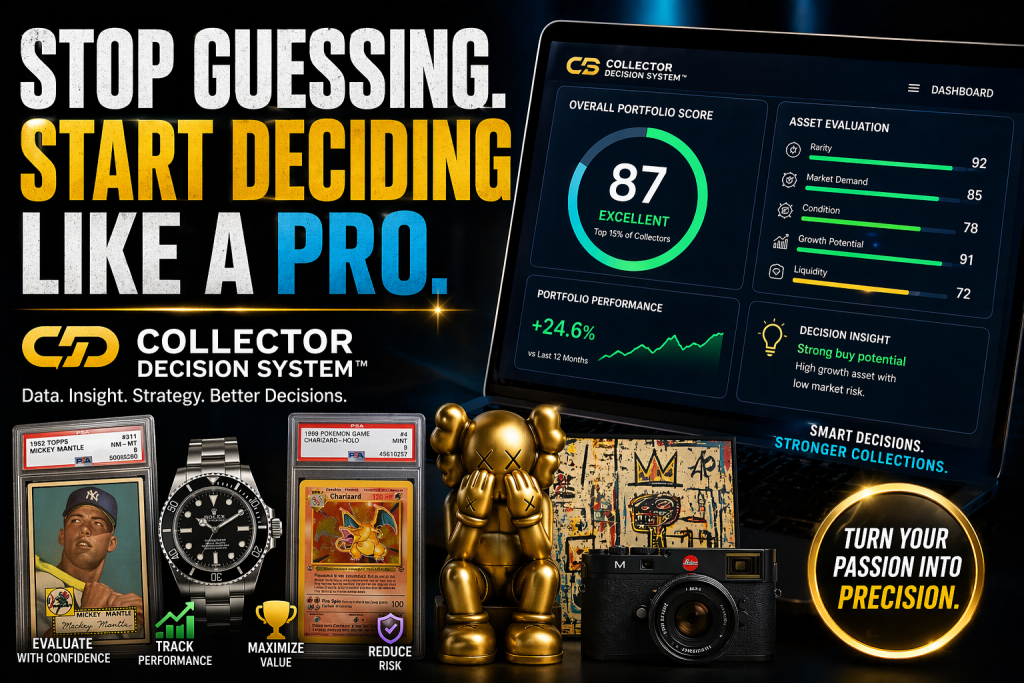
Stop Guessing. Start Deciding Like a Professional Collector. Posted by By Admin April 22, 2026 Every collector knows the feeling. You see something rare.The price feels right.The excitement kicks in.…
Collectiblepedia: Where Every Collection Tells a Story Posted by By Admin March 18, 2026 In a world driven by trends, speed, and constant change, there is something timeless about…
MPC (My Premium Collection): Where Collecting Becomes an Experience Posted by By Admin March 18, 2026 In a world driven by fast trends and constant change, collecting remains something truly timeless.…
The Knowledge Economy of Collecting: Why Education Is the New Competitive Edge in 2026 Posted by By Admin February 21, 2026 In 2026, the Smartest Collector Wins The collectibles market has evolved. What was once driven…
Why Collecting Is More About Meaning Than Money Posted by By Admin January 23, 2026 In conversations about collecting, value is often discussed in numbers. Prices, auctions, appreciation curves, and…
Community Is the New Value Multiplier in Collecting Posted by By Admin January 23, 2026 For generations, collecting was often a solitary pursuit. Collectors hunted for rare pieces alone, guarded…
Why Collectible Categories Keep Evolving (And Why That Matters) Posted by By Admin January 22, 2026 Walk into a museum today and you might see sneakers behind glass.Scroll through an auction…
Why Collectors Are Moving Away From Spreadsheets Posted by By Admin January 22, 2026 For years, spreadsheets were the quiet backbone of collecting. Coins. Cards. Watches. Comics. Wine. Sneakers.…
Why Smaller Niches Are Gaining Attention Posted by By Admin January 21, 2026 For decades, collecting was dominated by the big categories — fine art, classic cars, rare coins, vintage…
Private or Public? Why Today’s Collectors Want Both Posted by By Admin January 21, 2026 Collecting has always been personal — but it’s never existed in isolation. Today’s collectors live…